Uniqueness of Department of Agricultural Economics
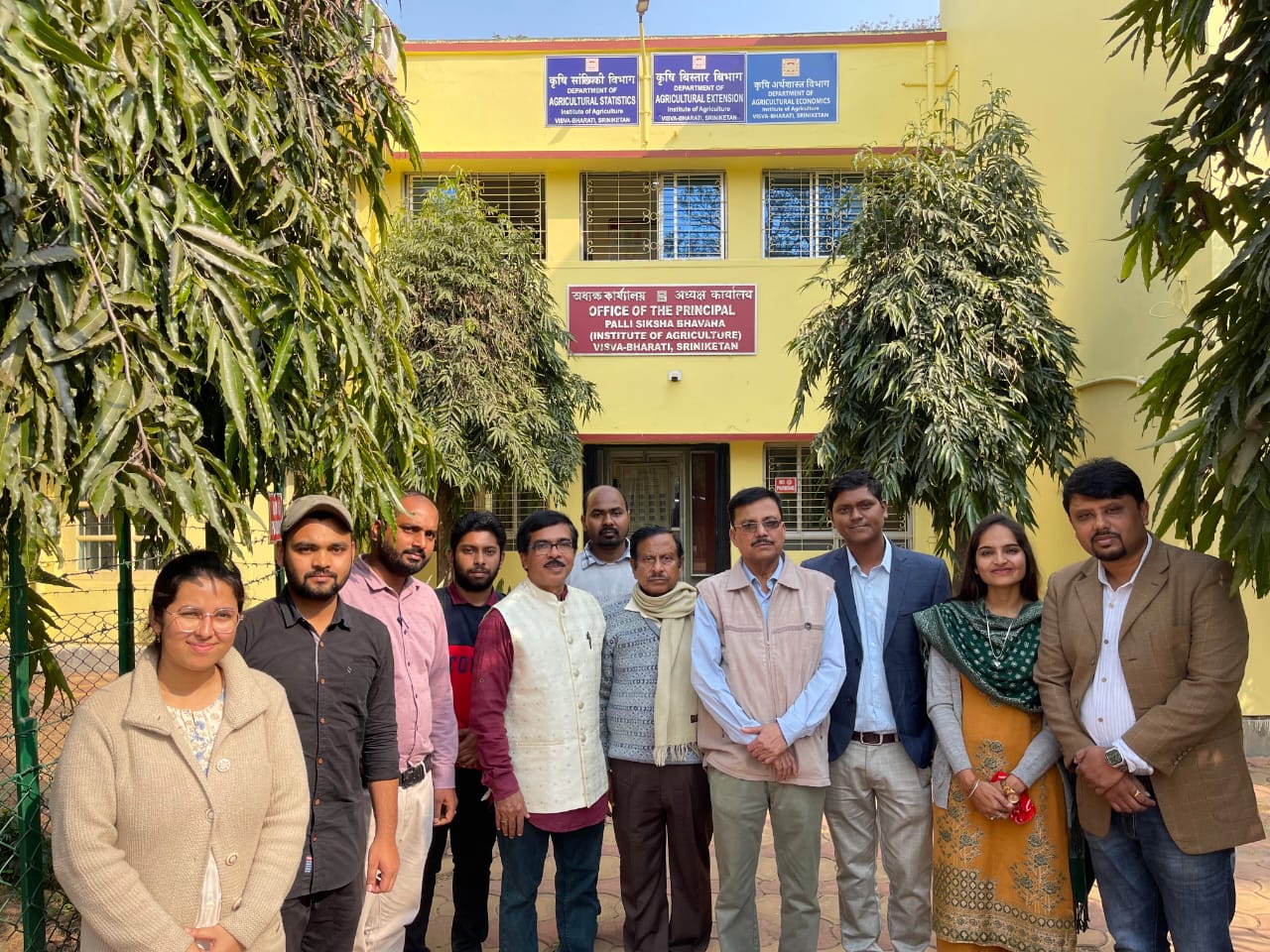
The Department of Agricultural Economics at Palli Siksha Bhavana stands out as an academically vibrant and forward-looking unit that successfully blends rigorous teaching, high-quality research, community engagement, and holistic student development. The department has built a distinct identity by offering a comprehensive academic framework spanning UG, PG, and Ph.D. programmes that are aligned with NEP-2020, ICAR Deans’ Committee recommendations, and global academic standards in agricultural economics. Its curriculum offers a unique balance of theoretical depth, quantitative rigour, experiential learning, and interdisciplinary exposure, enabling students to acquire cutting-edge competencies in agricultural markets, natural resource economics, agribusiness, digital agriculture, policy analysis, econometrics, and sustainable development. The introduction of innovative courses, multidisciplinary modules, and skill enhancement components further strengthens its relevance to contemporary agri-food challenges.
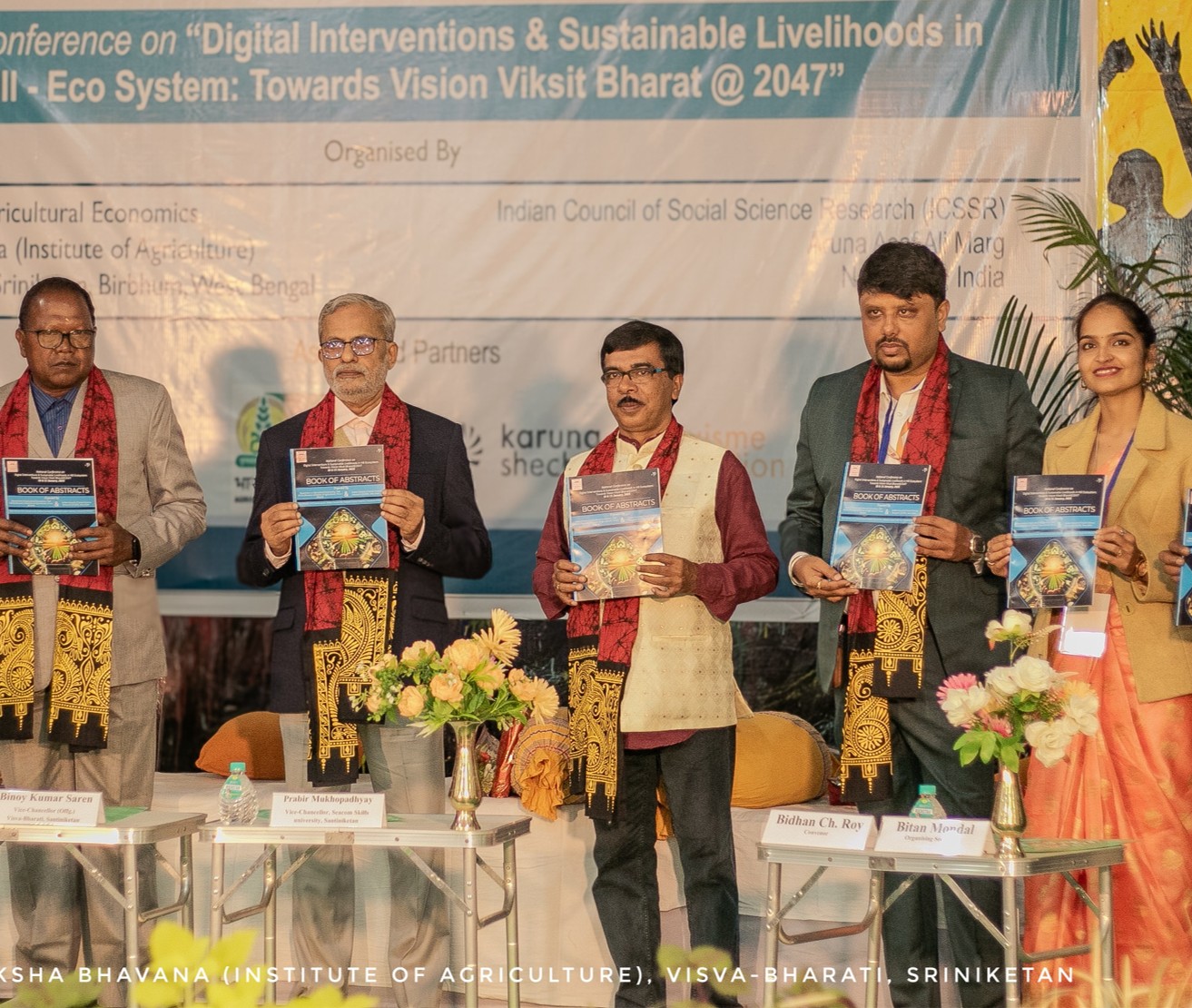
A key uniqueness of the department lies in its strong research orientation supported by prestigious national funding agencies and collaborative projects. Faculty members lead research initiatives on digital interventions in hill agro-ecosystems, simulation modelling of technology diffusion, FPO promotion, agricultural marketing, and livelihood enhancement, reflecting the department’s commitment to addressing emerging and policy-critical issues. The department’s academic visibility is further enhanced by faculty participation in national and international conferences, editorial boards of reputed journals, invited lectures for government training programmes, and recognitions such as national awards and international mentorship selections. Modern research-supportive infrastructure—including a dedicated Computer Laboratory, AR-VR Laboratory, ICT-enabled classrooms, departmental library, and shared seminar spaces—provides students with an advanced environment for analytical, computational, and applied research activities.
Another hallmark that distinguishes the department is its strong mentoring culture, which ensures sustained academic and personal support to students. Faculty members guide learners not only in coursework and research but also in preparing for competitive examinations, career planning, and independent academic thinking. This individualized mentoring system has contributed to consistent student achievements, including strong performance in ICAR-JRF examinations, participation in seminars, engagements with fieldwork, and progression into higher studies and research careers. Students also exhibit creativity and social responsibility through innovative practices such as gardening, campus cleanliness drives, and waste-to-wealth initiatives, promoting a culture of environmental stewardship and community-oriented values within the department.
Equally distinctive is the department’s commitment to extension, outreach, and field-based learning. Through RAWE programmes, field demonstrations, awareness campaigns, farmer trainings, and collaborations with KVKs and state-level initiatives such as VKSY, the department bridges the critical gap between academic knowledge and grassroots agricultural realities. These engagements cultivate practical understanding among students while simultaneously contributing to rural development and farmer empowerment.
Overall, the Department of Agricultural Economics embodies a unique institutional character shaped by academic excellence, interdisciplinary learning, policy-relevant research, modern technological resources, and a deeply student-centered ethos. Its integration of teaching, research, mentoring, extension, and innovation establishes it as a distinctive and impactful academic unit within Visva-Bharati, preparing future-ready agricultural economists equipped to contribute meaningfully at regional, national, and global levels.

Photos